
Even as the bilateral relationship between the two neighbouring countries remains hostile, there is growing coordination between India and Pakistan on one multilateral forum - the World Trade Organization (WTO). Both countries have made two joint submissions at the WTO as co-sponsors in the past two months. In June, Pakistan joined India, Cuba, and 44 African countries, seeking sufficient flexibility in intellectual property rights for developing countries to fight the Covid-19 pandemic.

Banks have raised concerns over the new international trade settlement in rupee, fearing that facilitation of such a mechanism could result in them facing the ire of economic sanctions by the West, people aware of the matter said. Large banks with overseas operations have sought clarity and assurance from the Reserve Bank of India (RBI) that they will not be targeted with sanctions for facilitating rupee trade with a sanction-hit country such as Russia. The present payment mechanism is a shift from earlier such arrangements, like the one with sanction-hit Iran, which involved banks facilitating settlement of international trade that did not have business in the sanctioned nation.
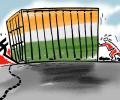
The government may roll out a new foreign trade policy (FTP) of a shorter term of two-three years in a bid to keep pace with the fast-evolving scenarios in international trade which have been triggered by recent disruptions, such as the pandemic and the Russia-Ukraine war. An FTP is an elaborate policy guideline and strategy to promote the export of goods and services, with a duration of five years usually. The existing policy came into force on April 1, 2015, and was valid for five years, before multiple extensions.
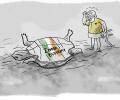
The International Monetary Fund (IMF) on Tuesday slashed India's growth forecast for 2022-23 (FY23) by 80 basis points to 7.4 per cent, citing less favourable external conditions and rapid policy tightening by the central bank. In its update to the April World Economic Outlook, the IMF said that though a global recession in 2022 was ruled out with a growth estimate of 3.2 per cent, the balance of risks was squarely to the downside, driven by a wide range of factors that could adversely affect the global economic performance. "The risk of recession is particularly prominent in 2023, when in several economies growth is expected to bottom out, household savings accumulated during the pandemic will have declined, and even small shocks could cause economies to stall.

The Centre plans to repeal the existing 80-year old Coffee Act and has proposed a new "Coffee (Promotion and Development Bill), 2022" to promote development of the Indian coffee industry. Through a new law, the government aims to modernise the functioning of the Coffee Board of India that is responsible for boosting production and the quality of Indian coffee, push exports and support the development of the domestic market. The Bill is likely to be introduced in the ongoing session of the Parliament.

The draft e-commerce rules released last year held e-commerce marketplace responsible if a seller on its platform failed to deliver the goods or services ordered by a consumer "due to negligent conduct, omission or commission of any act by such seller", causing loss to the consumer.

A depreciating rupee, which briefly hit 80 to the dollar on Tuesday, may boost India's exports but price-inelastic imports of crude oil and gold would mean limited relief on the trade deficit, which clocked a record $26.2 billion in June. Due to global risk aversion on the back of geo-political tensions and aggressive policy tightening by the Fed, the dollar has appreciated against most currencies, including the rupee. And, with other currencies depreciating, India's comparative advantage in this respect may be limited.

'We actually have a problem because there may be too much activity in India.' 'Markets don't like too much concentration. But we are very happy with our collaborations in India.'

The Union government will soon make amendments to the foreign trade policy (FTP) to enable exporters to claim export benefits for settling trade in rupees. These benefits are, so far, available for export payments received in foreign currencies. After the Reserve Bank of India (RBI) unveiled a mechanism to settle international trade transactions in the local currency on Monday, exporters have been demanding that the Ministry of Commerce and Industry come up with a clarification on the matter.
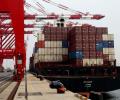
On the back of rising crude oil purchases, India's bill for imports from sanctions-hit Russia jumped 3.5 times in a year in April to $2.3 billion, showed data from the commerce ministry. In April, India's crude oil imports from Russia were valued at $1.3 billion, 57 per cent of India's total inbound shipments from Russia. Other major imported items during the month included coal, soybean and sunflower oil, fertilisers, and non-industrial diamonds. That month, Russia was also the fourth-largest crude petroleum supplier to India, after Iraq, Saudi Arabia, and the United Arab Emirates (UAE).

Some of these nations are India's biggest export market. India is also dependent on these countries to meet its energy needs.

As the kharif season is setting in, India is scrambling to source fertilisers from the international market. It is set to sign long-term contracts - especially with Morocco and Latin American countries - to ensure steady flow of supplies. "We have to source fertilisers wherever it is available because crops have to be secured.

In a bid to protect the domestic paper industry, the commerce and industry ministry on Thursday said it has decided to make registration compulsory for importing major paper products such as newsprint, handmade paper, envelopes, among others. All imports arriving on or after October 1 will be governed by the Paper Import Monitoring policy that aims to put an end to dumping of such products and address the issue of re-routing of goods through other countries in lieu of trade agreements. "The import policy of major paper products has been amended from 'Free' to 'Free subject to compulsory registration under Paper Import Monitoring System," an official statement said.
The Netherlands has emerged as India's fifth-largest export destination in 2021-22 (FY22), jumping from its 10th position a year ago. Exports to the fifth-largest economy in the European Union (EU) bolted 94 per cent to $12.5 billion in the financial year ended March 31. In FY22, the Netherlands surpassed Hong Kong, Singapore, the UK, Germany, and Nepal to become India's largest export destination in the EU. Germany, which was earlier India's top European export destination (eighth position), has now dropped two ranks to 10th place.
Shipments from Russia rose nearly 33 per cent to $1.1 billion in March from $831.17 million in the previous month, which was when the country mounted aggression on Ukraine and faced sanctions from Western nations, the data accessed by Business Standard shows. Growth in imports was largely on account of oil, people aware of the matter said. The Department of Commerce is learnt to have written to the Ministry of Petroleum and Natural Gas (MoPNG), seeking details of imports, including the payment mechanism, which India has not made public.

Without naming India, S&P said it expects that in regions where inflation already exceeds targets, or which are vulnerable to capital flight, central banks will be forced to raise interest rates.

The US on Thursday raised concerns over India's Personal Data Protection (PDP) Bill and draft non-personal data governance framework, claiming these could potentially threaten innovation and economic growth. In its latest 'Special 301' Report, the US Trade Representative (USTR) kept India on the priority watch list, maintaining the country remains one of the world's most challenging major economies with respect to protection and enforcement of intellectual property (IP). In December 2021, a joint parliamentary committee released a report recommending changes to the PDP Bill, 2019, that could undermine important IP protections in India.

This will be done across five cities - Delhi, Bengaluru, Coimbatore, Bhopal, and Shillong. Thereafter, it will be scaled up and launched in 100 cities over a period of six months, said a senior government official.

The Parliamentary Standing Committee on Commerce has observed that a massive shortfall in the budgetary allocation of over Rs 1,900 crore by the finance ministry to the industry department may have an adverse impact on the implementation of infrastructure (infra) projects in 2022-23 (FY23). While the Department for Promotion of Industry and Internal Trade (DPIIT) had sought Rs 10,267 crore from the finance ministry for FY23, it received Rs 8,348-crore allocation. For the National Industrial Corridor Development & Implementation Trust (NICDIT), the finance ministry has allocated Rs 1,500 crore instead of Rs 2,400 crore demanded for the project.

Nepal's decision to ban the import of non-essential items amid depleting forex reserves may hit Indian exports. The country's central bank - Nepal Rastra Bank - last week instructed commercial banks not to open letters of credit (LCs) for importing non-essential items. This is to prevent further decline of the country's foreign exchange reserves. However, it has not issued any formal communication yet.
 © 2026 Rediff.com - Investor Information - Advertise with us - Disclaimer - Privacy Policy - Sitemap - Feedback - About us - Terms of use - Grievances